
What is it?
For teachers, counselors or therapists who would like to utilize a highly trained dog in their practice, we can provide the same high standard training that our fully functioning Service Dogs gain.
Specifics
We cannot refer to it as a Service Dog because your Professional Therapy dog won’t be partnered with a disabled individual to help mitigate a disability. However, from a training and performance perspective, we apply the same, high standards to all the dogs we train. Along with the high standard obedience, we will teach your dog to perform tasks which can be integrated into the therapy you provide. Then, we’ll coach you how to maintain the dog’s behavior and share the methods we employ. As you discover all the amazing ways your dog helps you and assists your clients, you will be able to add new tasks to it’s repertoire.
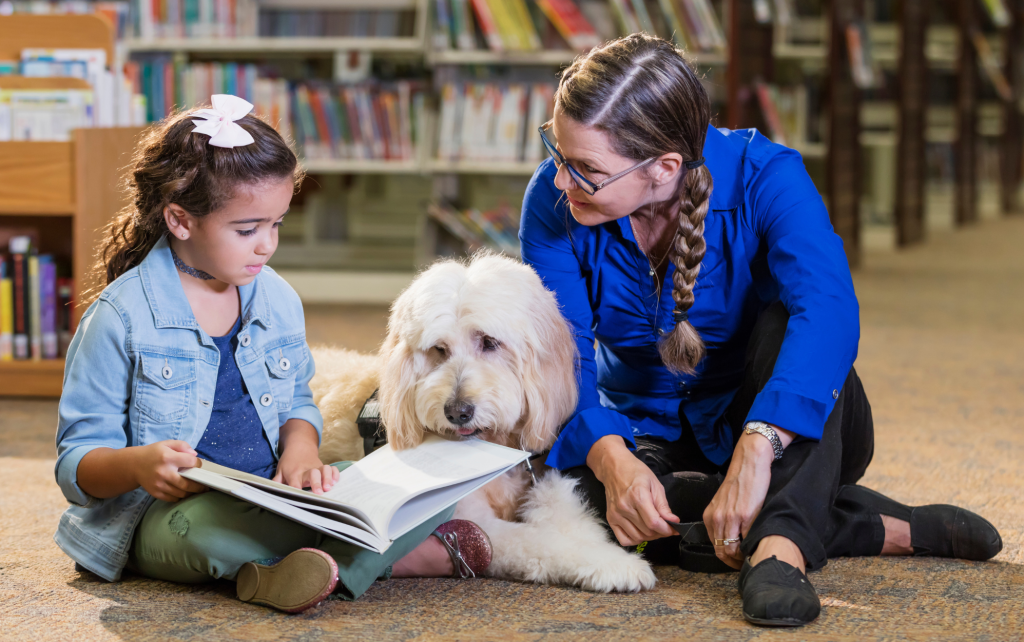
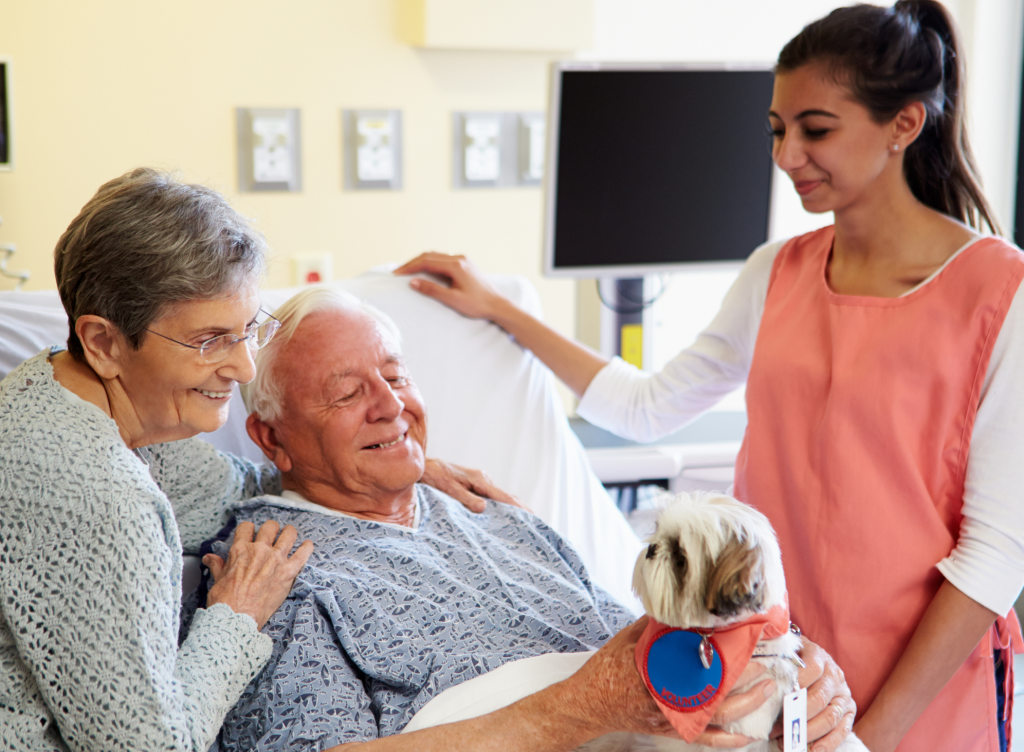
Traditionally, therapy dogs were well-mannered pets that had been trained by their owners who visited nursing homes, hospitals or rehabilitation centers. The dogs offered patients an opportunity to interact with a companion dog – one that might remind them of their own dog that they long to see.
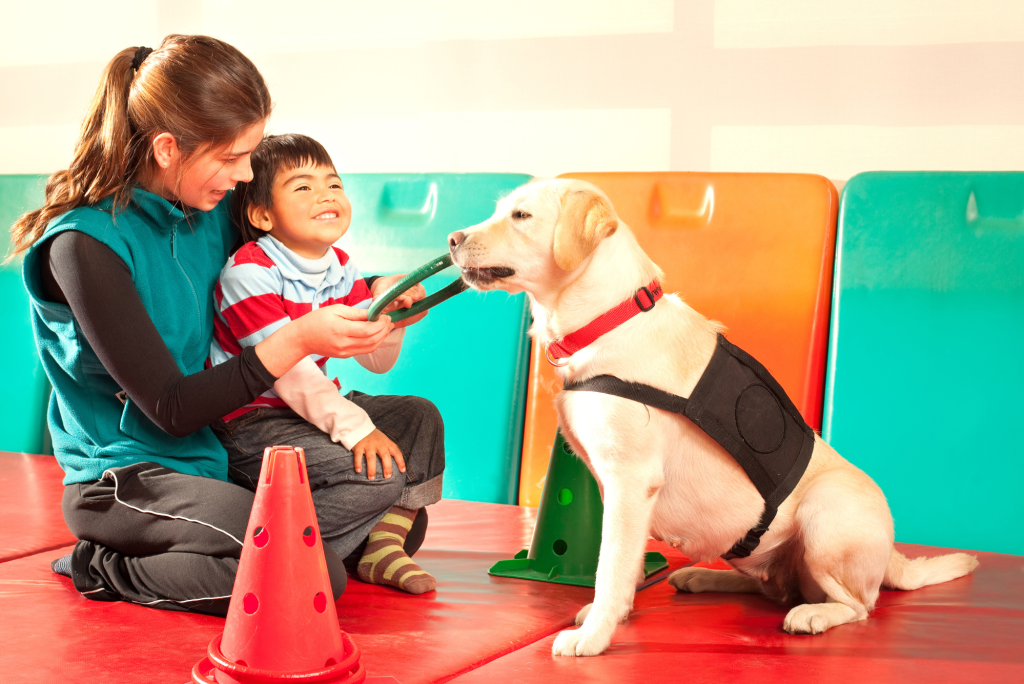
Rather than assistive behaviors that we teach to Service Dogs, the typical task list for a Professional Therapy dog is focused on “social” interaction skills and behaviors which help to foster physical, speech or occupational therapy as well as psychiatric intervention.
In one application, a professional therapy dog handler might work side-by-side with a Speech therapist. The patient is asked to speak a command word to the dog. Even when the patient is not able to fully enunciate, she can received positive feedback for trying because, standing behind the dog, the dog’s handler gives a non-verbal cue to the dog to perform the command.
Professional Therapy Dogs and their handlers can also work side-by-side with a Physical Therapy. Rolling or tossing a ball that the dog retrieves can encourage the patient to repeat the action. The dog can also remain in a specific position while the patient takes steps to reach it and then get the opportunity to pet or play with the dog.
In another application, the Therapist may employ her own dog in her practice. In that case she handles the dog while also carrying out the therapy session.
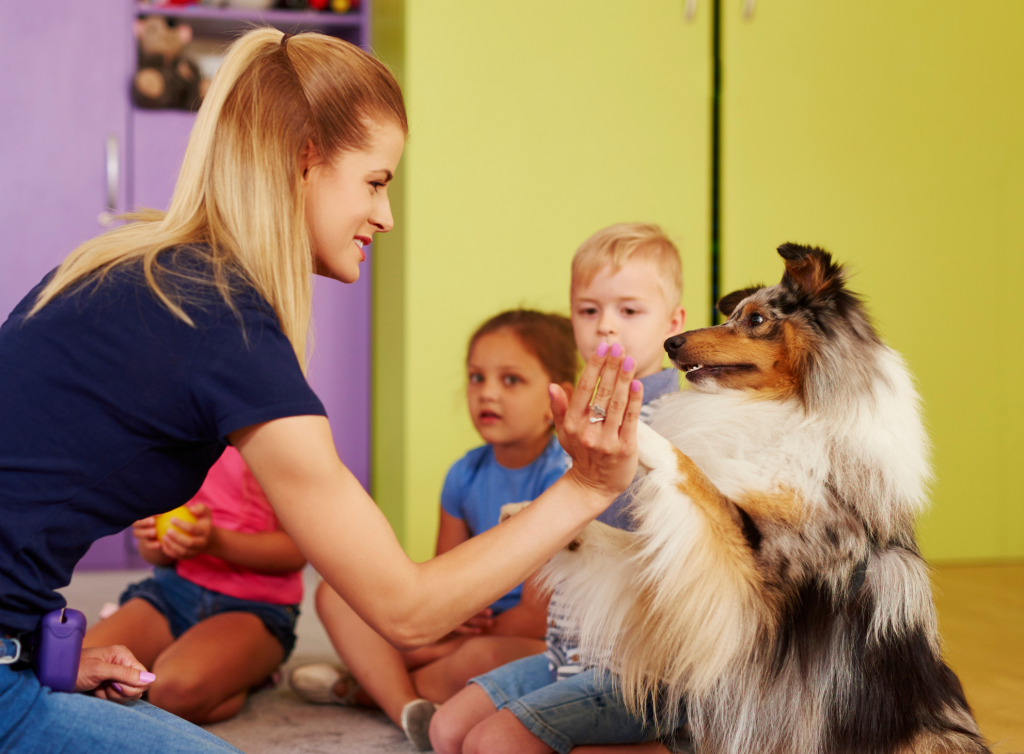
School counselors often interact with students during stressful times. Having a well-trained Therapy Dog to help soothe the child and bring a calming energy to the room can be incredibly beneficial. Many autistic children are able to maintain more centered behavior in the presence of a well-mannered dog. While a disabled child may not be able to handle his own Service Dog in a school setting, having a class room dog may make the difference between a great day and a complete melt-down.
At the other end of the patient spectrum, a professional therapy dog can assist an occupational therapist working with a senior stroke victim. Joe isn’t all that interested reaching for the brush and moving it towards his bald head, but he’s willing to stick to the task when he’s asked to brush the therapist’s professional canine assistant. She reminds him of his own dog at home. He is encouraged to work at his therapy in order to get home to his beloved companion.
If you are interested in our Professional Therapy Dog program, please contact us about your needs and we will work up an option for your dog’s training.
 COMMITTED CANINE