
“Do you train dogs for Parkinson’s Disease?” says the person on the other end of the phone.
“I don’t know. What do you want the dog to do?” I ask in reply.
I’m not an expert in Parkinson’s disease, but I suspect that a person with such a diagnosis might need the dog to retrieve fallen items. But, rather it’s possible he might need a dog to assist him in transferring from one chair to another or to provide balance during walking. It wouldn’t surprise me if the caller would like a dog to offer psychiatric support due to the anxiety that a disease like Parkinson’s Disease may impose on a person.
The conversation about whether we can train a dog to serve a person with a specific disability needs to merge information that you know about how the condition is limiting your function or independence, and knowledge that we have about what a dog can be trained to perform to help mitigate the disability.
A diagnosis, alone, cannot tell me whether a dog can help you. I am not a doctor. It’s likely that I do not know what it means to have your specific disability or condition.
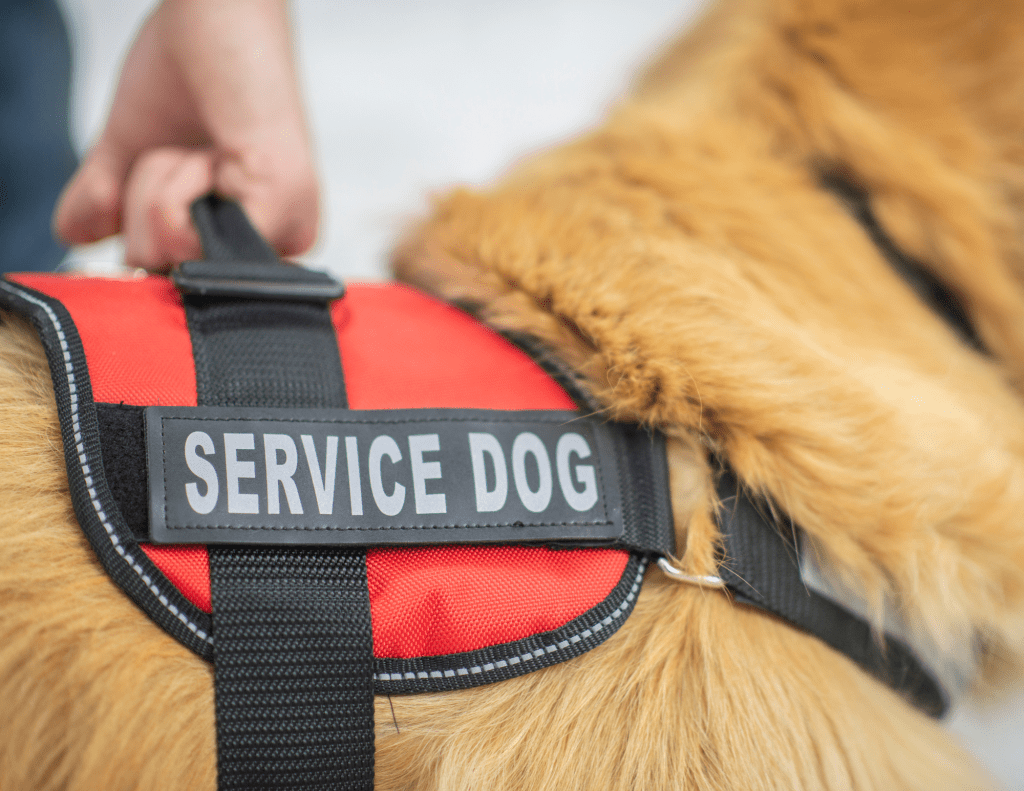
Prior to contacting us, please think with great clarity regarding what behaviors you would want a dog to perform that would mitigate your disability in some way. Then, can we meet in the middle between the “Dog Trainer” and the “Client” in order to assess whether using a trained dog is the best way for you to gain some relief from your disability.
An example “task” behavior might be, “I would like the dog to stand still to brace me when I get out of a chair”, or “I would like my dog to lay across my lap when I begin to become anxious or hyper- vigilant.”
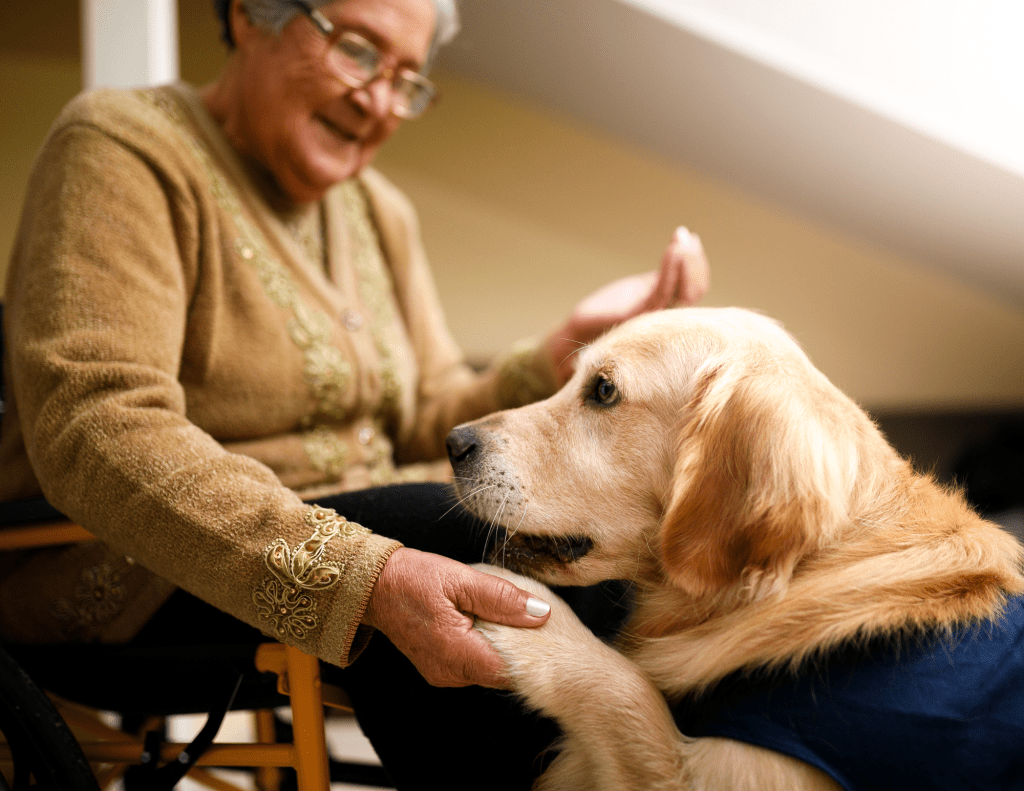
The fringe benefits of emotional support, companionship or even the extra ears and eyes that a companion dog can offer will always be available to you and may often seem to be the greatest advantage on any given day with your Service Dog. However, it is not a trained task and cannot be the sole defining attribute of a Service Dog. We must teach a Service Dog tasks that mitigate your specific disability to meet the ADA’s definition of a trained Service Dog.
You may not know what sorts of behaviors a dog can be trained to perform that might help you. That is the point of our conversation. You bring the information about where you need assistance, and if it’s not already a very common task that we train our Service Dogs to perform, we can think creatively to design a behavior that will likely assist you.
 COMMITTED CANINE
Leave a comment